Inicio » 2018
Archivo Anual: 2018
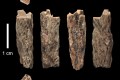
New Hybrid Bone Reveals that Neanderthals and Denisovans Mated
The closest known extinct relatives of modern humans were the thick-browed Neanderthals and the mysterious Denisovans. Now, a bone fragment from a Siberian cave, perhaps from a teenage girl, has revealed the first known hybrid of these groups, a new study concludes. The finding confirms interbreeding that had been only hinted at in earlier genetic studies.
Archaeological excavations have revealed that Neanderthals and Denisovans coexisted in Eurasia, with Neanderthal bones ranging from 200,000 to 40,000 years old unearthed mostly in western Eurasia and Denisovans so far only known from fossils ranging from 200,000 to 30,000 years old found in eastern Eurasia. Prior work unearthed Neanderthal remains in Denisova Cave, raising questions on how closely they interacted.
The Denisovan father of the individual Denisova 11 had at least one Neanderthal ancestor, possibly as far back as 300 to 600 generations before his lifetime. In addition, the teenage girl’s Neanderthal mother was genetically more similar to the Neanderthals of Western Europe than to a different Neanderthal that lived earlier in Denisova Cave. This find suggests that Neanderthals migrated between western and eastern Eurasia for tens of thousands of years.
Viviane Slon, Fabrizio Mafessoni, … Svante Pääbo
Nature (2018) The genome of the offspring of a Neanderthal mother and a Denisovan father.
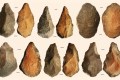
Homo erectus Were Technologically Conservative, Used Least-Effort Strategies
Archaeological excavations at the Acheulean site of Saffaqah near Dawadmi in central Saudi Arabia have found that Homo erectus, an extinct hominid species that lived between 1.9 million and 143,000 years ago, used ‘least-effort strategies’ for tool making and collecting resources.
C. Shipton et al. 2018. Acheulean technology and landscape use at Dawadmi, central Arabia. PLoS ONE 13 (7): e0200497; doi: 10.1371/journal.pone.0200497
 Hominin Evolution & Ecology